Major Platon Kovaloff and Alexandra Podtotchina’s Courtship and Marriage Relationship
The NoseMajor Platon Kovaloff and Alexandra Podtotchina’s Courtship and Marriage Relationship turns a conventional marriage negotiation into one of the story’s explanations for an impossible bodily loss. Kovaloff’s nose vanishes after he has avoided Podtotchina’s direct proposal; he then imagines that she has taken it as revenge and to compel the marriage. Her emphatic denial unsettles that accusation, but the two resume courteous conversation only after the nose returns, and Kovaloff still refuses the match.
Background and Terms
Kovaloff’s marriage prospects are bound to his ambitions and his self-presentation. Formerly a committee-man in the Caucasus, he insists on calling himself Major, a title he uses to enhance his importance. In Saint Petersburg he seeks a position suited to his rank, preferably vice-governor of a province, though he would accept a bailiff’s post. He is also willing to marry, but only a woman who can bring a dowry of two hundred thousand roubles. Marriage is therefore not presented as an isolated private desire: it sits beside his search for office and his continual attention to rank and social standing.
Podtotchina is a colonel’s wife with a daughter whom she wants Kovaloff to marry. He courts her readily, but avoids committing himself. When she tells him outright that she wants him to marry her daughter, he draws back gently, claiming that he is still too young and must serve five more years before reaching forty-two. That explanation makes postponement sound like a matter of age and timing; later, it becomes the basis for his suspicion that Podtotchina might retaliate against his refusal to proceed.
Suspicion After the Disappearance
When Kovaloff considers why his nose has disappeared, he constructs a story of revenge. He believes Podtotchina may have acted because she wants him to marry her daughter and he has kept her waiting. He imagines that she hired two sorceresses to disgrace him, turning a stalled courtship into the supposed cause of a supernatural assault. This is his conjecture, not an established account of what happened: the story supplies no proof that Podtotchina caused the nose’s separation.
The idea is compelling to Kovaloff because it gives a personal motive to a loss he cannot explain. He reasons that his nose was not cut off: no one entered his room, and he remembers it still being present after Ivan Yakovlevitch shaved him on Wednesday and throughout Thursday. Nor did he feel the pain that an ordinary injury would bring. He moves from these remembered circumstances to a suspected plot, and from the suspected plot to the question of whether to sue Podtotchina or confront her openly. The imagined marriage motive offers a human explanation, but does not solve the physical mystery.
Accusation and Reply
The next day Kovaloff decides to write to Podtotchina before bringing a formal legal action. His letter is an attempt to recover what he believes she has taken while putting pressure on her over the marriage. He says that her course will not make him marry her daughter, identifies her as the person chiefly responsible for the nose’s strange separation and subsequent appearances, and alleges that she or associates like her have used spells. He demands that the nose be restored that day, threatening legal proceedings otherwise. The letter makes his two grievances inseparable: he suspects supernatural retaliation for his hesitation, yet insists that the loss will not win her the marriage she wants.
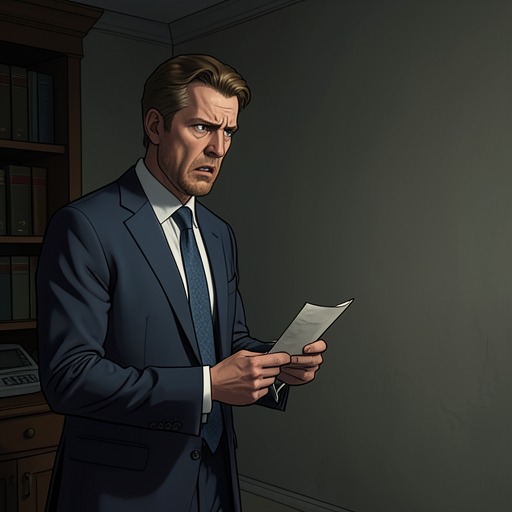
Podtotchina’s answer rejects both the accusation and its supposed evidence. She says that the official Kovaloff describes has not visited her, either disguised or in his proper person. She acknowledges that Philippe Ivanovitch Potantchikoff has visited and asked for her daughter’s hand, but says she gave him no encouragement. On the marriage itself, she insists that Kovaloff has misunderstood her intentions: far from wishing to snub him, she has hoped he would ask for her daughter’s hand and would gladly grant it. Her response is not an explanation of the nose’s disappearance; it is a denial of responsibility and a renewed expression of her desire for the match.
Reconciliation Without a Match
Kovaloff rereads the reply and concludes that Podtotchina is not guilty, reasoning that a criminal could not have written such a letter. The confidence of his accusation gives way to bewilderment: if she did not arrange the loss, he has no account of how it happened. His conclusion clears Podtotchina of his suspicion in his own mind, but it does not resolve the mystery or produce a marriage decision.
After the nose has returned, Kovaloff meets Podtotchina and her daughter. He approaches them; they respond graciously, and their conversation lasts a long time. He takes several pinches of snuff during the exchange, a small but pointed sign that the physical incapacity which had made him fear appearing in company has ended. He privately tells himself that they have not caught him and that he will not marry the daughter. The scene restores sociability while preserving his refusal: neither the renewed civility nor Podtotchina’s earlier invitation establishes a betrothal.
What the Relationship Reveals
The courtship links Kovaloff’s bodily crisis to the social identity he guards. He worries that he cannot appear before the women he knows without a nose, and his accusation casts the marriage proposal as a possible threat to his standing and autonomy. Yet his suspicion also follows the same status-conscious logic that shapes his ambitions: he interprets a baffling event through the pressures of rank, marriage, and reputation rather than through any evidence of Podtotchina’s guilt.
The exchange of letters briefly makes the relationship a contest over who will define the meaning of the delay. Kovaloff presents his reluctance to marry as firm and accuses Podtotchina of trying to overcome it by force; she answers that she wants the match and denies having attacked him. Once the nose returns, they can speak politely, but the underlying mismatch remains: Podtotchina welcomes his proposal, while Kovaloff privately rejects her daughter. The relationship thus ends not in marriage or a final rupture, but in restored social ease alongside an unchanged refusal.